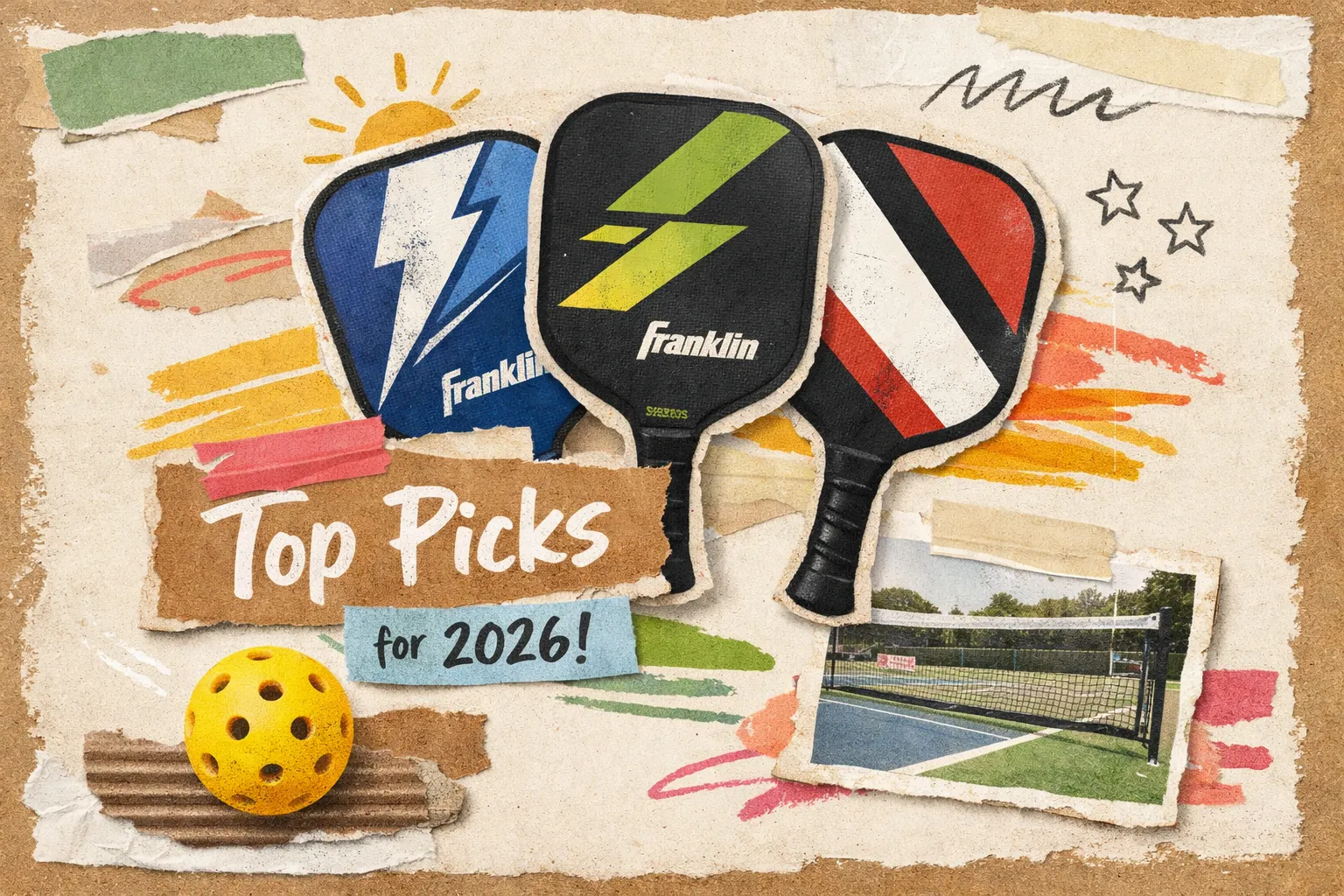
Franklin pickleball paddle buyers should revisit the brand in 2026. Franklin reworked materials and reorganized its lineup into three tiers that pair price with purpose.
What you need to know
Start here if you want the main points without reading everything. The bullets below cover tier structure, the C45 trade-offs, and the specs that affect on-court feel. Use these as a quick checklist before you review model comparisons and buying tips.
- Franklin now groups its paddles into entry, mid, and premium tiers so you can match a paddle to durability, all-around play, or carbon responsiveness.
- The C45 Tempo comes in 14mm and 16mm profiles; the 14mm favors pop and speed while the 16mm favors control and forgiveness.
- Choose thicker, softer cores and wider faces for tight dinks and resets; choose thinner carbon faces and lower swingweight for faster drives and more spin.
- Key specs to compare are weight, core thickness, face material, and swingweight—these have the biggest impact on dwell, sweet spot, and fatigue.
- Try paddles before you buy when possible: short demos focused on dinks, drives, and third-shot drops reveal how a paddle affects actual play.
1. What changed in Franklin’s 2026 lineup and why it matters
Franklin simplified its 2026 paddle range into three tiers so players can target specific needs rather than choosing by model name alone. Entry-level paddles use fiberglass or fiberglass-polypropylene faces and focus on affordability and durability. Mid-tier models like the Signature and FS Tour aim to balance playability and value, while the new C45 carbon series moves into performance territory with refined shapes and higher responsiveness. Pricing overlaps, but the tier should guide your priorities more than the sticker price.
- Budget: roughly $30–$100. Durable fiberglass or polypropylene cores, suitable for beginners and heavy-practice use.
- Mid: roughly $60–$160. Signature and FS Tour models with fiberglass faces and MaxGrit texture for balanced play and spin potential.
- Pro (C45): starting near $230. T700 45-degree carbon faces, double-thermoformed cores, and refined shapes aimed at tournament play.
Key 2026 tech includes T700 carbon at a 45-degree layup, double-thermoformed cores, polymer core options, and the MaxGrit surface. T700 carbon increases snap on drives, while double thermoforming improves sweet-spot consistency and durability. Softer polymer cores lengthen dwell time and help with touch, so choose the combo that fits your role on court.
Match feel to role: pick a thicker, softer core and slightly higher swingweight for steady kitchen control, or a thinner carbon face with lower swingweight and a 14mm profile for quicker acceleration and more pop. Test how a model handles dinks, resets, and transition shots to confirm it fits your game. The next section compares C45 Tempo thicknesses and Signature models to help you select a specific option.
2. Quick spec comparison of the top Franklin models
Specs tell you how a paddle will behave: weight affects swing speed and fatigue, face width defines sweet spot and forgiveness, and core type and thickness set dwell and control. Face material and texture determine spin and pop. When shopping for a Franklin pickleball paddle, prioritize weight and core thickness because those specs change on-court feel the most.
- C45 carbon series: weight 7.2–8.0 oz; core options 12.7, 14, or 16 mm; T700 carbon face; wide and elongated shapes; MSRP starting near $229.99. See a current C45 product listing for exact specs and finishes: Pickleball Warehouse C45 product page.
- FS Tour Tempo: weight about 7.6–8.4 oz; 14 or 16 mm cores; fiberglass or composite faces with MaxGrit texture; elongated or hybrid shapes; mid-range pricing around $100–$149.
- Signature Pro series: weight 7.6–8.6 oz; 16 mm polymer core; fiberglass face with textured surface; elongated shape; retail around $60–$100.
- GEO: weight typically 7.8–8.4 oz; foam or thin polymer cores; fiberglass face; widebody; budget MSRP near $39.99.
- X-1000: specs vary by release, usually positioned as a value composite paddle in the $40–$80 band.
Price tiers are straightforward: C45 sits in the premium bracket at roughly $229.99 and up, FS Tour and Signature Pro models occupy the mid-range, and GEO and X-1000 fill the budget slots. Verify USA Pickleball approval before buying if you plan to play tournaments, since approval can change by model and year. The next section breaks down how core thickness and face material affect shot control and on-court feel.
3. C45 Tempo 14mm vs 16mm: how the numbers translate to play
Numbers like core thickness and swingweight give a strong clue about a Franklin pickleball paddle’s behavior, but they don’t tell the full story. Thinner cores change swing dynamics, surface interaction, and sweet-spot behavior in ways you feel first at the kitchen line. The practical notes below help you choose the profile that matches your touch and transition style.
14mm profile: The 14mm profile produces a faster swing and more pop and spin. Tests show higher spin and lower swingweight for the thinner core, which gives quicker recovery and a livelier response on serves and drives. Expect more punch on drives and third-shot attacks, a slightly smaller effective sweet spot, and a greater need for clean contact on soft dinks.
16mm profile: The 16mm profile emphasizes plush control and kitchen consistency. The thicker core produces a plusher feel and a higher swingweight, giving a steadier, more forgiving response on dinks, resets, and off-center volleys. You trade some raw pop for easier third-shot drops and a larger effective sweet spot that helps patient, control-first players win long rallies.
Test both profiles with targeted drills: resets, third-shot drops, and quick volley recovery show the most difference. Simple tweaks let you tune feel: add 1–2 grams of lead tape near the edge to increase swingweight and stability on the 14mm, wrap a thinner overgrip to preserve quickness or a thicker one to soften the 16mm, and shift tape toward the handle to speed the swing or toward the top edge to add smash power. These adjustments help dial a C45 Tempo toward control or pop without changing your stroke.
4. Match a model to your skill level and playing style
Beginners benefit from forgiveness and predictable feedback. Look for Signature 16mm or FS Tour Tempo 16mm options that emphasize a larger sweet spot and softer core, which reduce harsh feedback on mis-hits and add dwell time for learning reliable dinks and third-shot drops. Focusing on control will build consistency faster than chasing raw power early on.
Intermediate players need a balance of pop and consistency as they add pace and spin. Mid-tier choices like C45 14mm variants or FS Tour 14mm deliver quicker response while remaining predictable, making them good fits for players expanding their shot repertoire. Use short on-court checks—10 hard baseline drives, 20 kitchen dinks, and spin trials on serves—to confirm fit before committing.
Advanced and tournament players should favor carbon faces and elongated shapes for extra reach, lower ball flight, and more spin potential. If you compete, confirm USA Pickleball approval and test a paddle in match-like conditions across one or two high-intensity sets to judge recovery, spin ceiling, and comfort. For an overview of tournament play and what to expect, see Pickleball Basics: The Rules of the game, Master The Dink. Small fit details matter: measure grip circumference where your fingers and palm meet, add about 1/8 inch for a firmer hold, or use underwraps to reduce bulk.
5. Where to buy, price expectations, and demo options
Expect three broad price tiers: budget fiberglass paddles roughly $30–$80, mid-range options $60–$160, and premium C45 carbon models starting near $230. Budget paddles cover recreational play and beginner sets, mid-range choices add refined face textures and core options, and premium paddles focus on weight tuning, surface tech, and refined balance. Look for blemished outlet sales or open-box deals if you want to lower cost without losing much performance.
Bundle deals and gently used demo paddles are common savings routes; retailers often pair paddles with balls, cases, or sets during sales. Local clubs and retailer demo racks are good places to find demo gear at steep discounts, and certified closeouts offer near-new items with cleaner warranties. When shopping, check demo availability, return windows, and warranty coverage since policies vary across sellers.
Reliable sellers include FranklinSports, Pickleball Central, JustPaddles, Pickleball Portal, Dick’s Sporting Goods, and local specialty shops. Large retailers stock inventory and run frequent sales, but demo access and warranty terms differ. At About, Master The Dink in Atlanta, we maintain a curated demo rack of Franklin choices and run focused 10–15 minute on-court sessions that test dinks, drives, and third-shot drops while offering quick grip analysis and balance tweaks. For more tools and local buying tips, see our Resources, Master The Dink.
6. Final picks, shopping checklist and next steps
Below are the Franklin models we recommend you try first, followed by a short checklist to use during demos or unboxing. These picks focus on kitchen play, transition performance, and overall value so you can narrow choices quickly.
- Signature Pro family: forgiving sweet spot at an accessible price, good for learning dinks and volleys.
- Signature Carbon or FS Tour models: more pop and control for refining drives and third-shot drops.
- C45 carbon family: dense face and balanced profiles that reward precise touch and aggressive play.
- Elongated or hybrid carbon designs: extra length and stiffness for added reach and drive power.
- GEO and X-1000 lines: value options that cover the basics without a large spend.
Use this checklist when you demo or unbox: confirm weight, core thickness, USA Pickleball approval if you play tournaments, grip size, and whether the sweet spot feels right under pressure. Check the return policy and warranty so you can swap the paddle if it doesn’t fit your game.
- Confirm weight range that matches your preferred feel, typically 7.6–8.4 oz for a balance of control and pop.
- Check core thickness: thinner for livelier response, thicker for plush control.
- Verify grip size and tack, and confirm USA Pickleball approval if you plan to compete.
- Note the return policy and warranty window before you finalize a purchase.
- Suggested test sequence:
- 5 minutes of kitchen dinks and resets
- 5 minutes of baseline drives and third-shot drops
- 3 serves to check feel on volleys and returns
Bring a cover, a couple of overgrips, edge tape, and a small roll of lead tape so you can tune swing weight and protect the face the same day you test a paddle. Start by comparing a Signature family paddle and a C45 carbon model to see whether you prefer forgiveness or precision.
Choose the right Franklin pickleball paddle for your game
Franklin’s 2026 lineup makes it easier to match a paddle to your priorities: value, balanced play, or carbon performance. Focus on weight, face thickness, and core feel when you compare models, and log how each paddle affects shot-making during short practice rallies. For a tailored recommendation, schedule a 15-minute gear consult so a coach can measure grip, test paddle feel, and build a short practice plan that fits the paddle you choose.
Leave a Reply