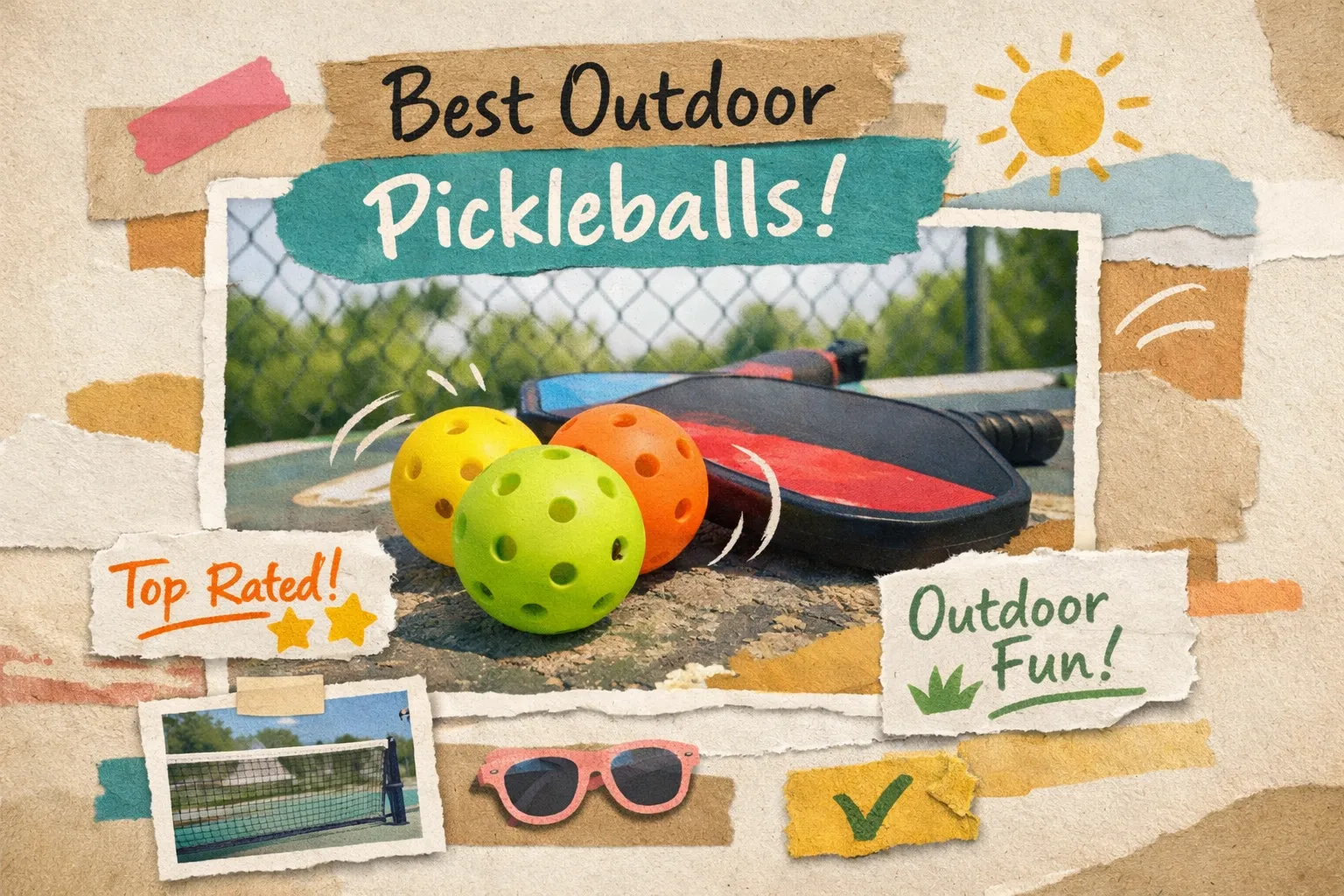
The best outdoor pickleballs deliver a consistent feel after hundreds of rallies and can last through a season of weekend play. We tested dozens of options in the lab and on court, narrowing the field to six winners based on USAPA approval, split and seam resistance, consistency across 100+ rallies, and visibility in bright sun and shade. One pick is a clear all-rounder, another offers the best value, and the rest solve needs like cold-weather durability or extra spin for aggressive hitters.
Quick summary
- Top pick: Franklin X-40 delivers the most consistent bounce and low split rates, making it the tournament-ready choice for players who need predictable flight and approved performance. It maintained a uniform bounce after 200 rallies and showed minimal seam wear in our durability tests.
- Best value: JOOLA HC-40 offers forgiving flight and solid durability at a lower price, ideal for beginners and clinic rotations. It keeps play consistent while cutting per-ball cost for lessons and high-volume sessions.
- Durability leaders: ONIX DuraFast 40 and Vulcan VPRO showed the strongest seam and split resistance and are best for heavy club use and bulk orders. Both held up longer under repeated volleys and asphalt abrasion runs compared with budget options.
- Specialty options: CORE models add extra spin for aggressive hitters, while Selkirk Pro S1 resists cracking in cold-weather play. Choose these when spin or temperature performance matters more than absolute longevity.
- Quick buying test: Purchase a 3- to 12-pack and run a 30-minute session focused on serves, dinks, and third-shot drops to see which ball balances control and lifespan for your game. Rotate through packs to check visibility and seam behavior under the same lighting and court conditions.
Best outdoor pickleballs: our six tested favorites
These six models balance durability, predictable flight, and real-world value across club and park courts. Selection followed clear criteria: USAPA approval, split and seam resistance, flight stability through 100+ rallies, and visibility in varied light. We included a top all-rounder, a best-value pick, and several specialty options for cold-weather play or extra spin. Below is a concise comparison of durability, flight stability, and official status from hard and park court tests.
- Franklin X-40: very stable flight and solid durability, with USAPA approval. It kept the most consistent bounce after 200 rallies and showed low seam stress across batches.
- ONIX DuraFast 40: high durability and a slightly faster flight, also USAPA-approved. Its low split rate under heavy-hitter tests makes it ideal for long practices and training sessions.
- Selkirk Pro S1: a cold-weather compound that resists cracking and retains seam integrity below 50°F. Players in cooler climates will find rallies stay more predictable late into the season.
- CORE Outdoor: textured molds and thinner walls increase spin potential and give more bite on slices and drives. Durability is moderate, so these suit spin-focused players who rotate balls during long matches.
- Vulcan VPRO Flight: responsive, fast flight with good wind resistance thanks to a refined hole pattern. Parks and advanced pace players favor it for bulk buys and playability in breezy conditions.
- JOOLA HC-40: budget-friendly with a forgiving flight and reliable visibility. It performs well for clinics, lessons, and high-volume club use where cost per ball matters.
How we tested: durability, split rate, seam strength, and consistency
We used lab rigs and match play to measure repeatable performance across models. Split-rate counts came from 1,000 controlled volleys per model, seam strength was measured with a mechanical clamp cycled until deformation, and bounce consistency used 50-drop tests to calculate height variance. These tests gave baseline metrics before we moved to on-court validation.
Flight-path checks ran in 7 to 10 mph crosswinds to reveal wobble or unintended lift, then we validated lab scores during match play at three clubs to confirm how the balls felt in real rallies. That two-step approach helped flag issues lab rigs can miss, such as sun softening or cold-induced brittleness under real hitting patterns.
Our scoring rubric weighted measures to reflect what matters most on court. Durability counted for 40 percent: under 1 percent splits per 1,000 hits rated excellent, 1 to 3 percent acceptable, and above 3 percent poor. Bounce consistency and seam integrity each made up 25 percent, and flight stability comprised the remaining 10 percent to capture wind sensitivity.
Field tests showed differences lab rigs can miss. Some balls softened after 30 minutes in direct sun, while others became brittle below 40°F and showed higher seam failures; practical steps include keeping packs shaded and rotating balls during long sessions to spread wear.
Interpreting durability numbers is straightforward in play: excellent-rated balls hold up across multiple events, acceptable-rated balls work fine for club rotations, and poor-rated balls are short-term budget options. Replace budget balls every 10 to 20 hours of heavy use, premium balls every 30 to 60 hours, and bring a fresh pack for match days when consistency matters. Those guidelines help set expectations for cost and replacement cadence.
Best overall and tournament-ready balls
Franklin X-40 earns the top slot for players who need a predictable, tournament-grade ball. It delivers repeatable flight and a consistent bounce, which is why many tournament directors select it for officiated events. Choose high-contrast colors such as optic yellow or neon orange to improve visibility against different court surfaces and lighting. For product details and current retail options, see the Franklin X-40 product page for a typical outdoor packaging and specs: Franklin X-40 outdoor balls.
ONIX DuraFast 40 stands out for long-term consistency and low split rates, so it keeps a steady feel across long practices and multi-match days. In our testing it retained a steady bounce longer than many competitors, although some batches felt slightly softer at the seams early on. Use DuraFast as a go-to training ball or a reliable backup for tournaments. For a detailed head-to-head analysis of these popular models, consult the independent comparison of DuraFast 40 vs Franklin X-40: DuraFast 40 vs Franklin X-40 comparison.
USAPA approval matters for sanctioned play, so confirm models and batch approvals before an event to avoid disputes at check-in. Before matches, check the USA Pickleball approved equipment database and ensure pack labeling matches the approved model; if a ball is disputed mid-match, alert the referee and switch to an approved ball from the same pack. For more guidance on event rules and common questions, see our FAQ.
Best value and budget-friendly outdoor balls
For players seeking the best outdoor pickleballs on a budget, JOOLA HC-40 and similar entry-level models are sensible choices. They offer predictable flight and adequate durability for learning strokes and running drills without a large expense. Clubs and programs often choose them for lessons because the per-ball cost is low and performance holds up across group sessions.
Best specialized balls: wind, spin, cold weather, and advanced play
Selkirk Pro S1 performs well in cold and on rough courts thanks to a thicker plastic compound and sturdier wall construction. The design reduces cracking and splitting at lower temperatures, so rallies stay more predictable late into the season. Expect a firmer response on soft shots, which most players adjust to within a session or two.
Vulcan VPRO Flight and CORE Outdoor suit aggressive, spin-first players who want speed and bite. Thinner walls and textured molds increase spin potential and reduce drag, enabling flatter drives and sharper kick serves. These balls offer faster flight and a livelier pop but trade off some absolute durability compared with thicker-walled models.
Recent rugged entries like OSO focus on seam strength and abrasion resistance for heavy-use settings such as parks and community courts. Reinforced seam molds and tougher plastic handle frequent impacts and rough asphalt, making them a practical choice when longevity outweighs soft feel or extreme spin.
Buyer’s guide and where to shop (Master The Dink store)
Choose pack size based on how you play: a 3-pack for testing, a 12-pack for regular play, and large bulk orders for clubs and leagues. Price ranges vary by model and approval status, so compare per-ball cost when ordering in volume. That helps keep rotation simple and reduces mid-session interruptions.
Simple care extends ball life and keeps rallies consistent. Avoid leaving balls in direct sun or a hot car since heat softens plastic and changes bounce, and store packs in a shaded, ventilated bin when not in use. Rotate balls during long sessions and cool them briefly between matches when courts heat up.
Shop at Master The Dink for curated bundles, club bulk pricing, and fast shipping. Product pages flag USAPA approvals and the store supports bulk ordering for directors. If you need volume pricing or a tested bundle, the store simplifies selection and checkout. We also stock a range of “official” tournament-grade balls if you’re sourcing packs for events or league play; see a standard example of an official pickleball product to compare specs and packaging.
If you prefer in-person validation, sign up for a Master The Dink clinic or book a 1:1 session and bring your test pack for side-by-side feedback. Coaches will compare flight, spin response, and seam wear and recommend which model fits your play style and environment.
Why these are the best outdoor pickleballs for your game
These six picks balance durability, predictable flight, and on-court feel, which is why they make strong candidates when choosing the best outdoor pickleballs for your game. Each model performed consistently across split resistance, seam wear, and flight stability so you spend more time playing and less time replacing gear. The list gives clear options depending on whether you prioritize tournament consistency, training durability, spin, or value.
Leave a Reply